Canto vs. Bynder
Canto is a turnkey enterprise DAM delivering powerful AI without the configuration complexity, and G2 metrics that prove faster time to value than Bynder.
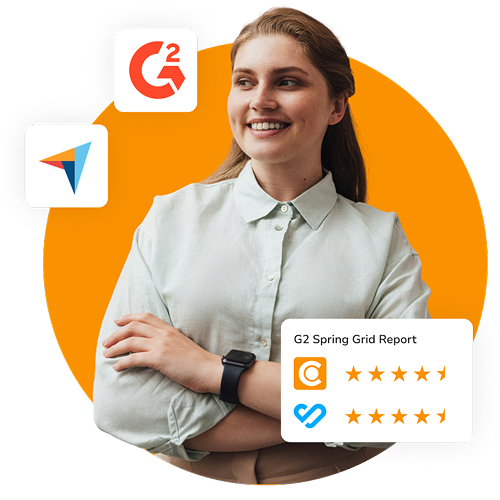
Enterprise power without enterprise complexity: how two leading DAM platforms compare across ease of asset management, administration, AI, adoption, brand management, pricing simplicity, security, and compliance.
Canto and Bynder are two of the most widely evaluated digital asset management platforms on the market. Both offer a deep feature set for organizing, finding, and distributing digital assets, but they are built around fundamentally different assumptions about who will use them and how.
Who is Canto?
Canto is the original DAM pioneer, with 30+ years of DAM expertise and 4,000+ brands worldwide. An intuitive, AI-powered, turnkey enterprise DAM, Canto delivers powerful AI search, unlimited Portals, workflow approvals, DAM for Products, and robust native integrations — without the dedicated DAM administrator, professional services engagement, or months of configuration that other enterprise platforms require. Your whole team can adopt it, and you can be live faster than the alternative.
Who is Bynder?
Bynder is an enterprise DAM platform designed for large organizations with dedicated IT and DAM administrator resources, complex brand governance requirements, and the budget to match.
What are the key differences between Canto vs. Bynder?
- Built to be used, not administered. Canto’s clean, intuitive interface means teams are productive from day one with minimal training. Bynder is feature-rich, but that depth comes with a steep learning curve and complex configuration.
- AI video search and hybrid search. Canto searches both images and videos with one unified experience; no toggling, no mode-switching, and video jump-to-timestamp built in. Bynder has no true video AI search and requires switching or additional filtering between AI and traditional search modes.
- Implementation speed. Canto goes live in 2.8 months on average; Bynder takes 4 months (Spring 2026 G2 Enterprise DAM Grid Report below) and can require third-party professional services to complete setup.
G2 ratings comparison, Spring 2026
Canto is the most popular DAM platform on G2. According to reported metrics in G2’s Spring 2026 Enterprise Grid Report for Digital Asset Management, Canto outranks Bynder for Net Promoter Score (NPS), Implementation Time, Average User Adoption, and Estimated ROI in months, all key metrics for a turnkey Enterprise DAM investment. Additionally, Canto outperforms Bynder on every facet of G2 Enterprise DAM Asset Management, Administration, and Media Types features.
| G2 metric | Canto | Bynder |
|---|---|---|
| NPS | 67 | 63 |
| Implementation Time | 2.8 months | 4 months |
| Average User Adoption | ~ 60% | ~ 44% |
| Estimated ROI | ~ 10 months | ~ 13 months |
Canto vs. Bynder feature comparison
The table below compares Canto vs. Bynder across the categories most relevant to DAM buyers evaluating mid-market and enterprise solutions.
| Feature | Canto | Bynder |
|---|---|---|
| User interface & ease of use | Intuitive, clean; fast adoption, minimal training | Steep learning curve |
| Asset organization | Folders; AI-assisted metadata based on existing taxonomy; AI-assisted categorization for new uploads at scale; Smart Tags | Tag-only with no folders; requires strict discipline and admin; AI tagging/enrichment based on generic visual detection |
| AI-powered search | AI visual search, reverse image and visual similarity search; hybrid search across all asset types including video | AI image search only; no video search; toggle/filtering required |
| DAM for Products | Built-in; no third-party integration needed | No native option; requires separate platform and third-party integration |
| Brand management | Unlimited Portals, Style Guides, approvals and Digital Rights Management (DRM) in core DAM | Digital brand guidelines, brand portals, core approvals, and governance in core DAM |
| Workflow & approvals | Built-in approvals; annotations; version control | Built-in capabilities but requires significant configuration |
| Integrations | 90% native integrations: Adobe CC, Workfront, Slack, Salesforce | 160+ integrations; ~60% via third-party connectors |
| User licensing | Unlimited end users | Tiered: Admins, Regular, Light Users; limits adoption |
| Implementation time | 2.8 months average | 4 months average |
| Analytics & reporting | Built-in usage insights for all customers | Advanced analytics tied to higher-tier plans |
| Security & permissions | Granular role-based access controls (RBAC); simple to configure | Complex to manage at scale |
| Pricing model | Transparent, flat; unlimited users and portals | Variable; per-user; key capabilities required add-on purchases; fees compound |
Enterprise capability, without the enterprise overhead
One of the central tensions in enterprise software is the trade-off between capability and usability. Platforms built for the most complex organizational environments often carry overhead that makes them difficult for everyday users to adopt, and DAM software is no exception.
Canto
Canto’s folder structure, clean interface, and guided onboarding mean teams are productive from day one, without the weeks of configuration or specialist administrator involvement that complex platforms require. G2’s Spring Enterprise DAM 2026 data puts Canto’s enterprise user adoption rate at approximately 60%, compared to Bynder’s 44%, a gap that reflects not just design philosophy, but a measurable difference in whether teams use the platform they’ve purchased.
Bynder
Bynder’s folder-less taxonomy, rigid user licensing, and customizable dashboards are for environments with dedicated DAM administration. Due to the infrastructure needed, adoption rates stall with overhead showing up in implementation timelines (4 months on average versus Canto’s 2.8 months).
Bottom line: Evaluate potential DAM vendors across key metrics like ease of administration, setup, average user adoption, and estimated ROI. The adoption gap between Canto and Bynder, 60% versus 44% on G2, represents real hours recovered, assets found rather than re-created, and brand governance that works because people are using the system.
AI that works across your whole library, images, video, and everything in between
Both platforms have invested significantly in AI capabilities, but they differ in which problems their AI is built to solve and how accessible those capabilities are for the average user.
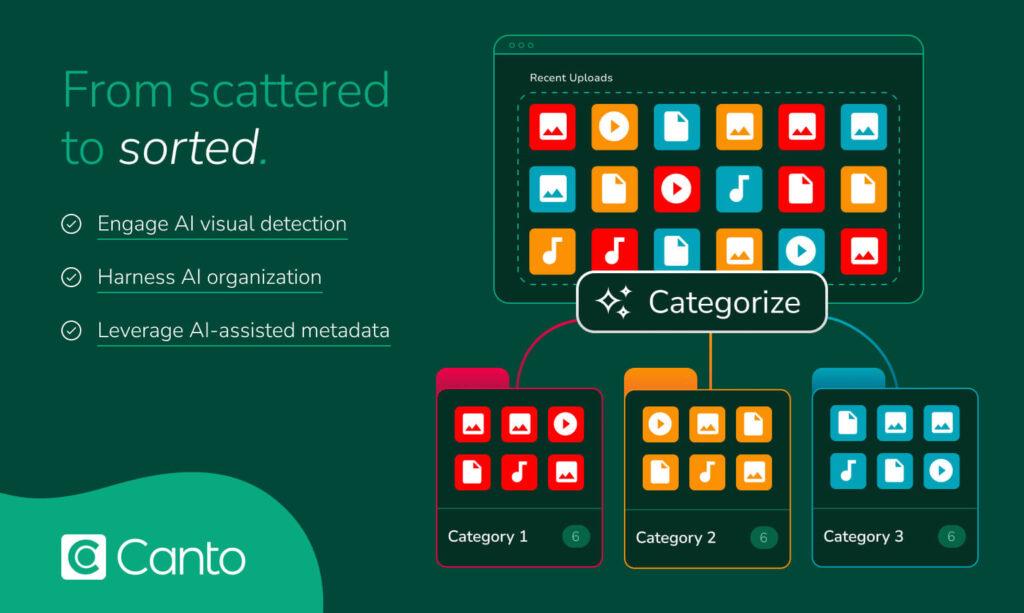
Hybrid search to discover content without mode-switching
Canto combines AI-driven visual results, natural language queries, and an organization’s own metadata, product names, campaign tags, and custom fields in a single unified search experience with no mode-switching or filtering required. The result is a search experience that gets more accurate over time as it learns your library’s specific taxonomy, not just generic visual detection.
Bynder requires users to toggle between an AI search mode and traditional metadata search, creating friction before discovery even begins.
For teams searching a shared library dozens of times a day, that friction compounds. Mode-switching isn’t a minor UX inconvenience; it’s the difference between a tool your whole team reaches for and one they avoid.
AI image and video search built for production teams
Canto AI Visual Search scans not just images but video assets using object detection, facial recognition, audio transcription, and jump-to-timestamp functionality, allowing users to navigate directly to the relevant moment in a video, not just locate the file.
Bynder’s video search relies on transcripts and generic tags with no true visual recognition or jump-to-timestamp capability.
As video becomes a larger share of most brand libraries, the gap here widens. Locating a file is table stakes; navigating to the right moment inside it is what saves production teams real time.
AI assistants to organize libraries at scale
Canto AI Library Assistant learns an organization’s taxonomy and metadata structure over time, analyzing existing tags to understand how a specific team organizes its content. As it ingests new assets, it recommends organization-specific tags drawn from that learned taxonomy, so metadata stays consistent with established conventions rather than drifting into inconsistency.
Bynder’s Enrichment AI Agent processes assets in isolation. It does not build on existing metadata conventions or recommend tags aligned to an organization’s structure, which limits the compounding accuracy benefit that structured metadata can provide.
As metadata accuracy drifts, assets go unsearchable, campaign work disappears into untagged backlogs, and brand governance erodes not from a single decision but from inconsistency at scale. A library assistant that learns your taxonomy stops that from compounding.
What about Bynder’s AI Agents?
Bynder offers AI Agents for workflow automation, content enrichment, and governance, capabilities that can be valuable when given appropriate resources to manage, govern, and administer AI agents. For most teams, however, the practical AI priority is fast, accurate, team-wide search, an area where Canto’s platform is more directly aligned and proven.
The bottom line on AI
Bynder’s AI is built for organizations with the resources to configure and maintain it. Canto AI is built to work from day one, across your entire library, without complex configuration. A 2026 Canto study found that teams with mature, AI-supported workflows are twice as likely to see significant gains as those using AI in more fragmented ways (44% vs. 19%). AI embedded where teams already work compounds faster than AI that requires a separate workflow to activate.
If your team needs to find the right asset fast, whether that’s an image, a product video, or a frame inside a clip, the gap between the two platforms is meaningful in practice, not just on a feature checklist.
Product content and imagery, owned and managed in one place
Organizations that manage product imagery, specs, packaging files, and SKU-level content face a challenge that a generic digital asset repository is not designed to solve. Managing that content effectively requires connecting structured product data to the digital assets that represent it.
Canto
Canto DAM for Products combines asset management and product data in a single platform; no separate product information management system, no third-party integration, and no syncing overhead between tools. Teams can organize product data around creative assets and push finalized content and product details to storefronts, partners, and marketplaces, with every product launch coordinated from one source of truth.
Bynder
Bynder has no native product information management capability. For organizations that desire to connect product information to their digital assets, a separate PIM platform and third-party integration are required to keep the two systems aligned, adding coordination and overhead with every new product launch or modification.
Bottom line: New Canto research suggests 78% of product-driven businesses are using two or more separate solutions to manage product content, with only 38% using a centralized product information approach. Teams with full digital asset and product content connectivity are 4x more likely to see significant content ROI improvement (56% vs. 13%).
Every new SKU, product refresh, or regional launch creates a fresh coordination challenge when product data and brand imagery, video, and other assets live in separate systems. Canto eliminates that overhead, giving teams one source of truth for both the asset and the product information it represents. That means faster product launches and updates, and more consistent storefronts, at the same time.
Brand governance your whole team can use
Brand management is increasingly central to the DAM buying decision, as marketing and creative teams look for a single platform to house both their asset library and the tools that control how that brand content is governed, distributed, and updated.
Canto
Canto is built for end-to-end brand management, combining the governance infrastructure and creative execution tools teams need to protect and scale their brand. Every plan includes unlimited Portals with granular access controls, interactive Style Guides to centralize brand assets, Digital Rights Management, approval workflows, analytics, and asset expiration dates, giving teams the controls to maintain brand integrity from day one. Brand Studio extends those capabilities with AI-powered template creation for scaling and localizing on-brand content, while Approval Hub centralizes proofing and version tracking for complex review cycles, and Media Publisher automates delivery to storefronts, websites, and distribution platforms. Together, these capabilities form a connected brand management system where governance, content production, and distribution work from the same source of truth.
Bynder
Bynder includes brand governance capabilities in its DAM, digital brand guidelines, brand portals, and core approvals and governance controls, with key capabilities such as templates (Studio), editorial workflow, omnichannel, and advanced analytics available as add-ons.
Bottom line: Brand governance only works when there’s an intuitive system in place to support the entire brand lifecycle, from brand guidelines and content creation to approvals and global distribution, without usage limits or excessive add-ons.
Integrations built to last, not just to check a box
A DAM platform’s integration ecosystem directly affects both implementation complexity and ongoing operational stability. The distinction between native integrations and third-party connector-dependent integrations matters significantly for maintenance overhead and reliability. Both platforms offer APIs.
Canto
Canto’s integration library is 90% native connectors, compared to Bynder’s ~60% third-party connector reliance. Canto connects natively with Adobe Photoshop, Illustrator, InDesign, and Premiere Pro, as well as Workfront, Slack, Salesforce, and WordPress. For product-driven brands, Canto also offers Shopify and Amazon integration to streamline product-driven workflows.
Bynder
Bynder advertises 160+ integrations, which represents a broader ecosystem by volume. However, approximately 60% of those integrations run through third-party connectors, adding licensing costs, additional points of failure, and ongoing maintenance responsibility that falls to the customer’s own team.
Bottom line: Integration debt is one of the most underestimated costs in the DAM evaluation. Third-party connectors break, require separate renewals, and add a layer of support complexity your team absorbs. Canto’s native-first approach means fewer failure points, lower maintenance overhead, and more predictable performance across the tools your team uses every day.
What your contract says, and what you’ll actually spend
Comparing DAM pricing requires looking beyond the headline contract value to account for the compounding costs that affect total cost of ownership over time. Beyond the base DAM license, total cost of ownership for either platform should account for implementation costs, third-party connector licensing to the technology stack, usage-based variables, and any add-ons necessary.
Canto
Canto is designed to give teams the enterprise power they need out of the box, without the enterprise cost. Unlimited end users and unlimited Portals are included in the core plan to help teams scale easily and Canto AI is embedded directly into the platform where teams work, not offered as a separate tier or upgrade. For teams that want to go further, Canto offers add-ons across the content lifecycle, including Brand Studio, Approval Hub, and Media Publisher. Tailored onboarding and implementation plans based on 30 years of DAM experience deliver shorter timelines (2.8 vs. 4 months) and higher adoption (60% vs. 44%) than Bynder.
Bynder
Bynder’s base package carries a significant entry investment before AI capabilities are included, with AI requiring an additional fee. User limits and add-on fees compound as an organization scales, professional services are typically priced separately from the platform license, and full support access is gated behind higher spend thresholds.
Bottom line: DAM software costs rarely end with the contract. Beyond the initial contract value, the heaviest total cost of ownership occurs when vendors charge specific user-limits, add-on product fees, usage-based charges, third-party integration, and implementation support. Canto’s inclusive pricing model means you can forecast your investment with confidence and your team can scale without watching the meter.
Enterprise-grade security, without the enterprise complexity
Both platforms meet enterprise-grade security requirements across the most common procurement evaluation criteria, and both share a common set of core certifications: SOC 2 Type II, ISO 27001:2022, GDPR, HIPAA, and CCPA. The meaningful differences between them are less in feature parity and more in operational complexity.
Canto
Canto’s permission model supports granular role-based access control at the folder, album, and individual asset level, including guest access management, watermarking, and download restrictions. SAML 2.0 SSO with Okta, Azure AD, and other major identity providers is supported, along with MFA, audit logging, 24/7 platform monitoring, and annual third-party penetration testing. The system is designed to be administered by the marketing or operations manager who owns it, rather than requiring IT involvement.
Bynder
Bynder’s security feature set is comparable; SSO, RBAC, encryption at rest and in transit, audit logging, and regular external security audits are all available. Permission management at scale, however, can become difficult to maintain without dedicated administrative resources.
Bottom line: Security reviews that require IT involvement slow procurement and add friction every time your access model changes. Canto is built to pass enterprise security reviews and be managed day-to-day by the marketing or operations teams who own the system, giving IT confidence without creating an IT dependency.
Why brands choose Canto vs. Bynder
Choosing the right DAM platform is ultimately a decision about what your team can realistically adopt, scale, and get lasting value from. Canto is built around that reality. With enterprise-grade AI search across images and video, unlimited Portals and end users, more brand management tools out of the box, built-in product asset management offered, and a deep library of native integrations, all in one intuitive platform, Canto gives teams the power they need without the complexity they don’t. Transparent pricing and an average implementation time of just 2.8 months mean your team is creating, finding, and delivering assets faster than most organizations finish configuring their alternatives. For teams that want to grow without growing their admin overhead, Canto is built to move with you.